Progress continues on wiring

I’ve neglected to post over the past week. Been a busy week at work. I have made some good progress though.

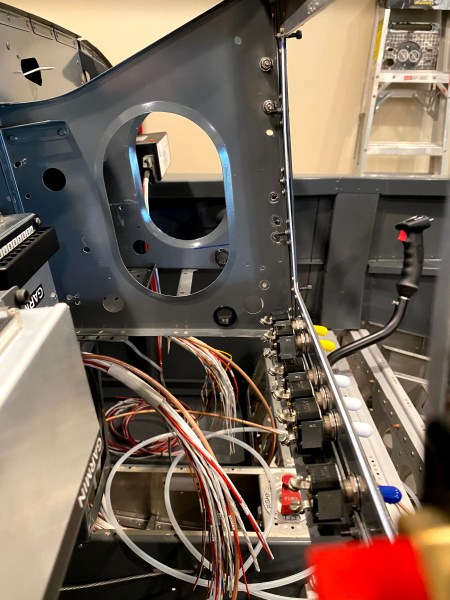
I vinyl-wrapped the fuse block panel and screwed the fuse block into it. I made a bus bar from a strip of copper to tie together the upper and lower buses of the fuse block.


I drilled some system holes through the left seat ribs, installed snap bushings, and ran the pitot and AOA lines from the wing root to the panel.


Drilled a couple of system holes in the lower sub-panel. Routed the the wires for the battery backup. Terminated the grounds for the the IBBS and the IBBS master switch.


Made up the connectors for the GTX 45R transponder and the GTN 625 GPS. I also started on the GTR 200B COM radio but didn’t get a picture.


Today’s Time (hours): 6.0
Finish Kit (hours): 112.0
Total Time (hours): 842.0


Began wiring the panel

I’ve spent quite a bit of time researching and documenting a plan to make the wiring easy. I complied a list of wiring nodes in a spreadsheet that I can use as a checklist to work my way through the project. You can see my work here… Wiring Plan

Didn’t actually wire anything today but rather did a lot of the prep work. I fabricated a center panel that will hold the fuse block in the center pedestal. I purchased the power panel option from Van’s which included the sheet metal for the center console. I purchased the 32 position Busman fuse block from Waytek.


Prepped everything up and painted it to match the interior.

img_4480


Removed all of the avionics and the panels. I probably could have left the stuff mounted to the sub panel and left the panels in place. But when I had mounted everything with black oxide steel screws and subsequently learned that they would rust over time. So I purchased black oxide stainless replacements. This was the most opportune time to replace them all.


I installed a ground block being careful to remove all the paint and scuff up the sub-panel to ensure a good electrical connection. I re-mounted the backup battery, the GAD 27, GAD 29, and GEA 24 to the sub panel.


I drilled a couple of new wire holes through the bottom of the stand-offs and installed snap bushings. The original holes interfered with the GTX and the switches in the bottom of the middle panel.

img_4481


Today’s Time (hours): 8.0
Finish Kit (hours): 106.0
Total Time (hours): 836.0


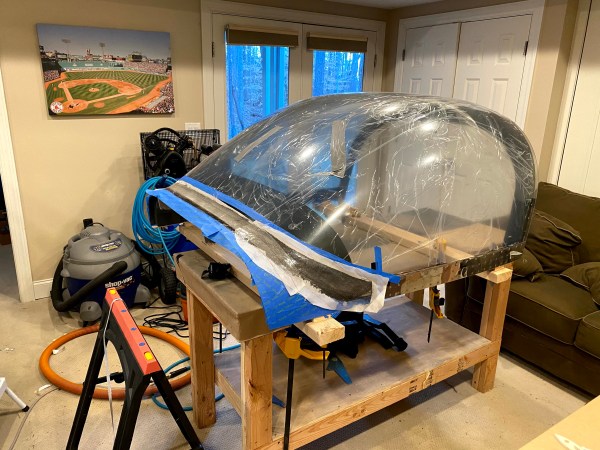
Completed the canopy fairing

More filling and sanding to eliminate low spots and pinholes.

img_4451


More filler/primer and sanding and a final coat of filler/primer and we’re done with the fairing. Finally!


This took forever but I’m happy with the result. Learned a lot about body work the hard way.    🙂

Onward!

Today’s Time (hours): 4.0
Finish Kit (hours): 93.0
Total Time (hours): 823.0


Filled and sanded the fairing

Removed the peel ply. Sanded everything to the proper shape and feathered the forward edges. Filled a few small voids with body filler and sanded everything smooth. Sprayed the skin and fairing with filler primer. The primer showed a bunch of imperfections. Sanded them out and shot another cost of primer. Looks like there are still a number of tiny voids and pin holes. I’ll sand the primer back and decide whether I need some more body filler at that point and then shoot another coat of filler primer. Overall I’m happy with the way it’s turning out considering I’ve never done body work before. Things I learned today… Body people earn their money!


Today’s Time (hours): 5.0
Finish Kit (hours): 89.0
Total Time (hours): 819.0


Work on canopy fairing continues

Sanded the rest of fairing to the proper shape and feathered the forward edge. I used 80 grit sandpaper and then a pass with 220. The shape looked really good.


I was going to shoot the fairing with some filler primer. I masked everything off and then wiped the surfaces down with some alcohol. After wiping everything down, I noticed that I had a few small voids and a couple of areas where I had sanded through to the canopy. So rather than filler primer, I decided to go with an additional layer of fiberglass. I used the “A” ply template to cut out some fiberglass cloth. I mixed up some epoxy with black pigment. I wet down the areas to be covered, applied the cloth, stippled it down, and positioned it. I also mixed up some epoxy and micro balloons and used it to fill the voids. I let it all set up for a bit then applied a top coat of epoxy and covered with peel ply.


Up next… More sanding. Yay.


Today’s Time (hours): 5.0
Finish Kit (hours): 84.0
Total Time (hours): 814.0


Started sanding the canopy fairing

This is the first substantial project I’ve done that involved laying up fiberglass. I will be more judicious in the application of epoxy in the future. I figured I’d just hit it with some 60 grit and bing, bang, boom. We’ll not so much. Sanding fiberglass is a slow messy process. Three hours in and I’ve got the basic shape on three quarters of the fairing. Still not down to the tape on the forward line. This is going to take a while.


On a brighter note. I had an awesome flight today with Jared in his RV-14A. We had lunch at KGMU and then stopped by KVPC and hung out with Wes and I went for a ride in his RV-7A. Very similar in a lot of ways to the RV-14. A bit tighter in the cockpit but by no means uncomfortable. All in all a great day!


Today’s Time (hours): 3.0
Finish Kit (hours): 79.0
Total Time (hours): 809.0


Laid up the fiberglass canopy fairing

Sanded the filler down and replaced the aft line of doubled electrical tape. It got pretty scuffed up. Then I added the layer of sacrificial masking tape over the electrical tape


Laid out the fiberglass cloth and cut the strips according to the cut list in the plans. Then cut out the sides using the provided patterns. Cut the peel ply.


Used plastic wrap as a backing for the bottom layer which is applied wet. Wet the A and D plies with epoxy that I dyed black so it would look right from the inside of the canopy. I wet the masked of canopy and skin with the dyed epoxy. I removed the inside plastic wrap carrier from the A and D plies, applied them, then removed the outer plastic wrap. I stippled the fiberglass down with a chip brush.


I let the inner plies set up until tacky then applied the B and C plies along with the first of the narrow strips. I continued to build up the forward part of the canopy with successively wider strips until I got to a 4″ radius curve. I used the gauge I had fabricated earlier to measure the curve.


I applied a thick top coat of epoxy. Then I removed the sacrificial masking tape and applied the peel ply.

img_4382


Next up… remove the peel ply and sand it to final shape.


Today’s Time (hours): 6.0
Finish Kit (hours): 76.0
Total Time (hours): 806.0


Sanded the filler and filled the low spots

Used some 60 grit sandpaper to quickly take down the filler to the profile of the canopy. There were a few low spots on the sides and voids around the canopy clips. So I mixed up a small batch of epoxy with micro and filled them in.

Today’s Time (hours): 1.0
Finish Kit (hours): 70.0
Total Time (hours): 800.0


Attached the canopy to the frame.

Riveted the side skins and canopy handles.


Tightened the screws and nuts holding the canopy to the aft frame in the middle section called out in the places. Tightened the screws and nuts holding the canopy and skins to the frame rails.


Fabricated and attached the canopy wear strips.

img_4348


Mixed up some epoxy resin with micro balloons and black pigment. Used the mixture to fill the void where the canopy and skin come together.


Today’s Time (hours): 5.0
Finish Kit (hours): 69.0
Total Time (hours): 799.0