
Mistakes were made. Learned a lot. Glad I learned these lessons on the practice project and not the airplane. Got lots of practice drilling out rivets.
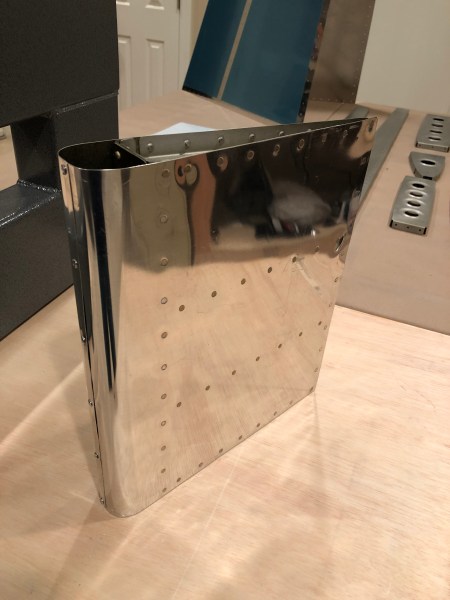
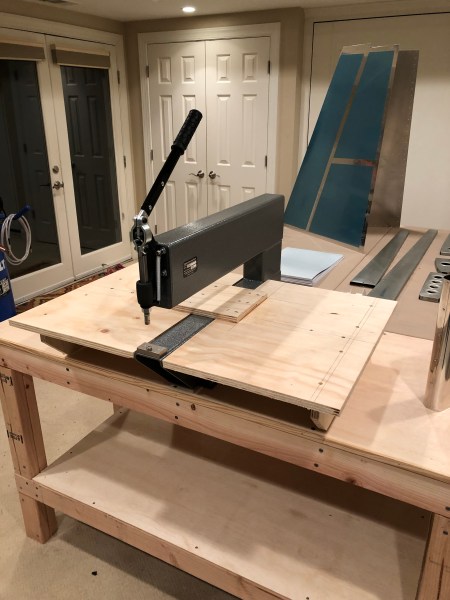
Mistakes were made. Learned a lot. Glad I learned these lessons on the practice project and not the airplane. Got lots of practice drilling out rivets.
I’ll be honest. I was dreading this step. I had never sprayed anything before. Turned out to be not nearly as bad as I thought. I didn’t get get pics of the process. Maybe next time.
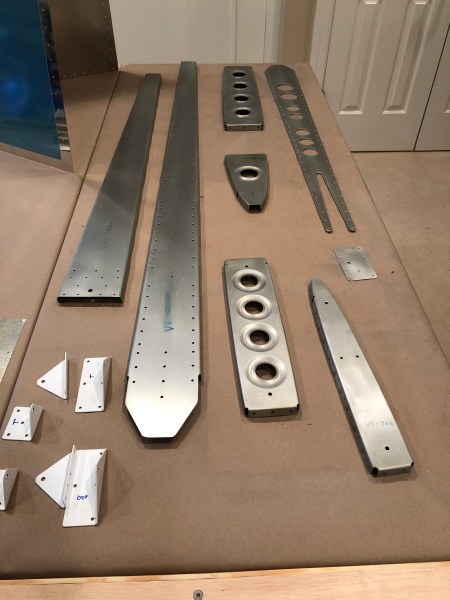
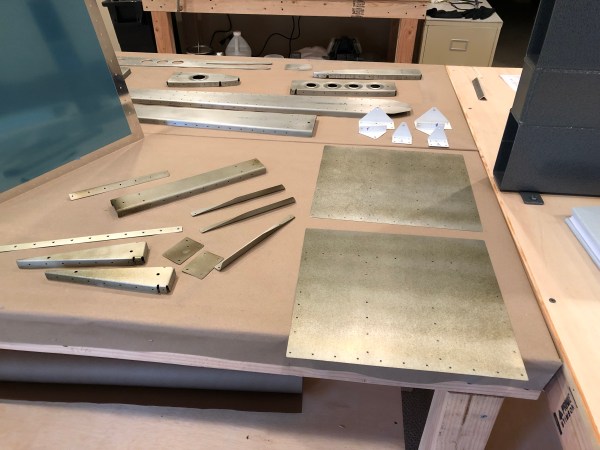
My first attempt was on the practice project. Took a while to figure out how to get the gun set up. Shot way too heavy on the practice project. You can see how much darker those pieces are than the actual plane parts. I got it dialed in and I am happy with the result on the plane parts. They almost look like they’ve been anodized. They’re just a little darker and duller than bare metal.
The gun I used is a cheap touch-up hvlp gun from Harbor Freight. It’s perfect for the smaller parts and acceptable for the skins. I went with a narrow fan about 8 to 10 inches from the work with 30-40 lbs at the gun. I wiped everything down with lacquer thinner before I shot the primer. I mixed the P60G2 1-to-1.5 with the R7K44 reducer per the data sheet from Sherwin-Williams. The P60G2 was way more goopy than I expected. I was thinking it would be like paint. It was actually thicker and stickier. I wore a Tyvek suit, a 3M respirator, safety glasses, and nitrile gloves.
I bought an empty paint can at home depot that I am using to store and properly dispose of left over paint and solvent. I ran lacquer thinner through the gun and right into the can to clean up. It took about two ounces until it ran clear.
| Today’s Time (hours): | 1.5 |
| Empennage Time (hours): | 9.0 |
| Total Time (hours): | 9.0 |
I’ve been using a single flute de-burring bit in my drill on the low speed setting to deburr all the holes. It seems to work pretty well. I hit it with about two turns and light pressure. That leaves a nice clean finish without enlarging the hole or leaving a visible chamfer.
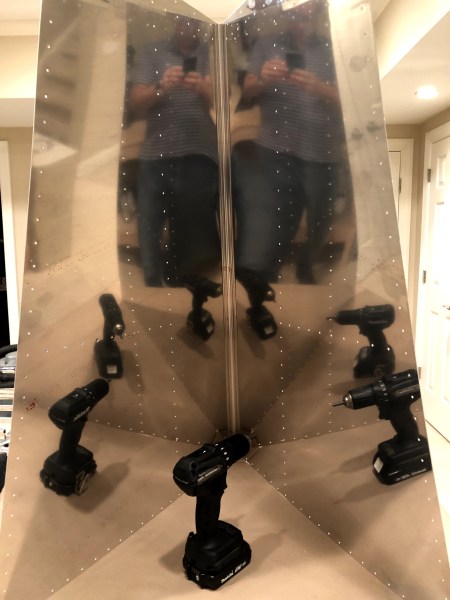
Today I dispelled the notion that this airplane is going to be perfect. I was trying to de-burr the edges of the skin on the scotch bright wheel and accidentally touched the other side of the skin to the grinding wheel. It hit the top corner of the skin and bent it a bit and took a nick out of the edge. I was able to straighten it. It was only bent a few degrees. I was also able to file the nick out of the edge. Probably not the worst mistake I’ll make. It only cost me about ten minutes.
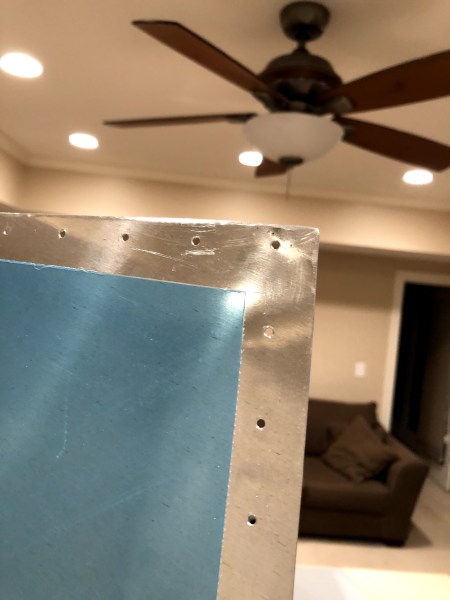
I picked up a bit extension from home depot yesterday so that I could use the de-burring bit on the insides of the flanges. This kept the bit sufficiently straight and produced an acceptable result.

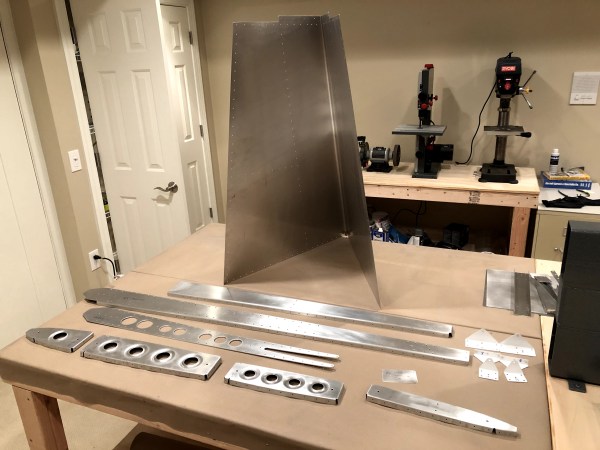
Used a maroon scotch bright pad and scuffed everything up. Ready for priming.
| Today’s Time (hours): | 3.0 |
| Empennage Time (hours): | 7.5 |
| Total Time (hours): | 7.5 |
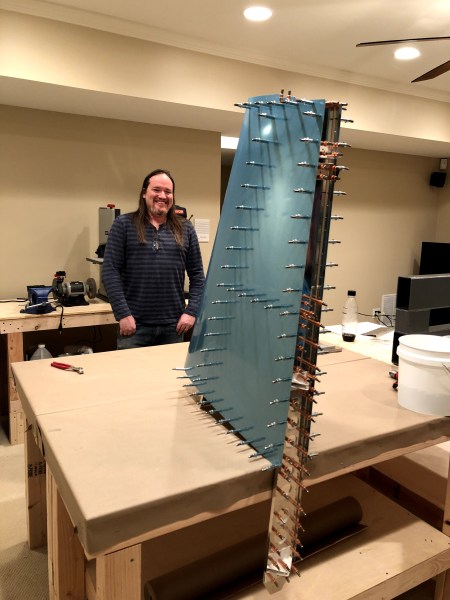
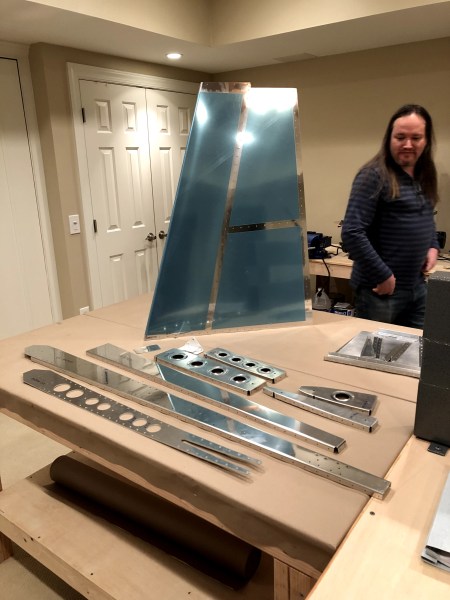
We had help from my brother-in-law, John O’Brien today. Lot’s of fun building with family! We cleco’d the skin to the substructure, match drilled all the #40 holes, disassembled everything, and peeled the blue plastic from the rivet lines on the skins with a soldering iron that I blunted on the bench grinder.

| Today’s Time (hours): | 2.0 |
| Empennage Time (hours): | 4.5 |
| Total Time (hours): | 4.5 |
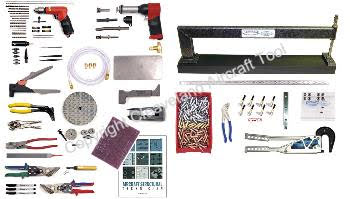
I ordered the RV14 toolkit from Cleaveland Aircraft Tool with the pneumatic squeezer and DRDT2 options. It arrived yesterday and I unpacked and inventoried the contents. The pins to mount the toke to the squeezer were missing and the DRDT2 was shipped separately. I emailed Cleaveland last night and got a response first thing this morning with an apology for the oversight. They indicated they’d ship the missing parts immediately. Great service, Cleaveland!
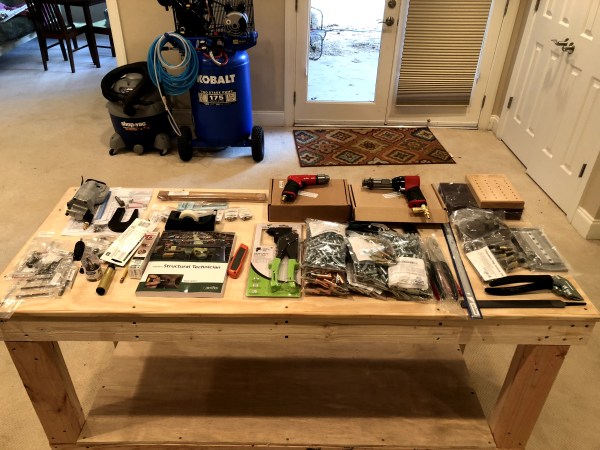
Ordered the empennage kit from Vans, Tool kit from Cleveland, and bought a compressor from Lowes.


 Ron's RV-14A Build Log