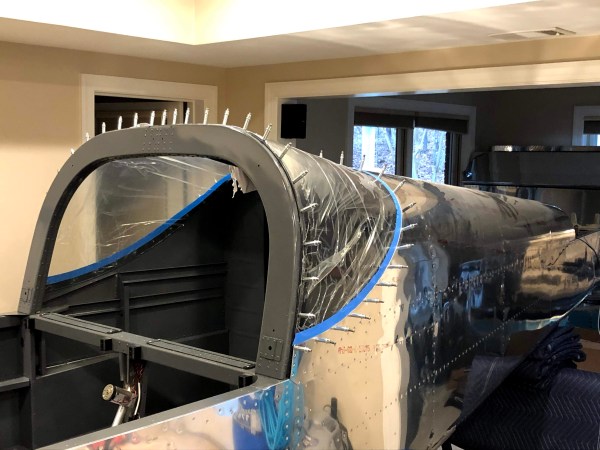
Countersunk the canopy

Broke the top edges of the side skins with the edge roller. Sawed a kerf into a small wood block on the band saw and used it to tweak the edge of the top skin under the slot and aft. Dimpled the canopy attach holes in the side skins.


Countersunk all of the holes in the canopy with a zero flute countersink.


Fabricated that aft canopy seal with a hole punch and a razor knife.


Today’s Time (hours): 2.0
Finish Kit (hours): 64.0
Total Time (hours): 794.0


Drilled and countersunk rear window

I ground a #40 drill bit to a sharp point. I used this to drill the plastic without any cracking. I used light to moderate pressure on the drill and let the bit do the work. It took 6 to 8 seconds or so to drill each hole. For the holes on the roll bar, I chucked a regular #40 bit in another drill. I used the pointy one to drill through the plexi then switched to the other drill for the metal. I carefully started the bit; turning it by hand until I was certain it was on the metal and wasn’t going to grab the plexi. Worked like a charm.

img_4140


I final drilled #36 the holes in the forward edge of the plexi and roll bar with a regular bit. Had no problems with the bit catching the plexi after drilling with the #40 initially. I tapped the both the plexi and the roll bar for #6-36 screws per the plans. I think the plans have you tap both the plexi and the roll bar together despite the fact that we’ll final drill the plexi to #27 in the next step to help ensure good hole registration. This should help to avoid any pressure on the plexi when it is screwed down that might cause cracks later. After drilling and tapping each hole, I lightly set a crew in the hole before moving on to the next.


I placed some tape along the forward edges where the protruded beyond flush with the window shim to mark it for trimming. I removed the window from the fuselage and Final drilled #27 with a plexi bit and countersunk all the holes in the plexi using a zero-flute countersink. This gave nice smooth countersinks. I used a vixen file to carefully trim the forward edge back about 1/32 in a couple of spots and smooth everything out. I used the edge of a pare of scissors to put a bevel back on the inner and outer edges where I had filed and then finished with 400 and 1000 grit sand paper.


Today’s Time (hours): 4.0
Finish Kit (hours): 14.0
Total Time (hours): 744.0


Installed landing lights and lenses

Cut the plexiglass lens to 3/4″ larger than the opening in the wing using the Dremel with a diamond dust blade. Cut like buttah.

img_2618

Covered the lens with tape to protect it. Put in in place within the wing and traced the opening onto the tape. I lined up the backing places and marked the tape with the finished cut lines. I cut to final size with the Dremel and sanded the edges smooth with a sanding drum in the drill press.

img_2619

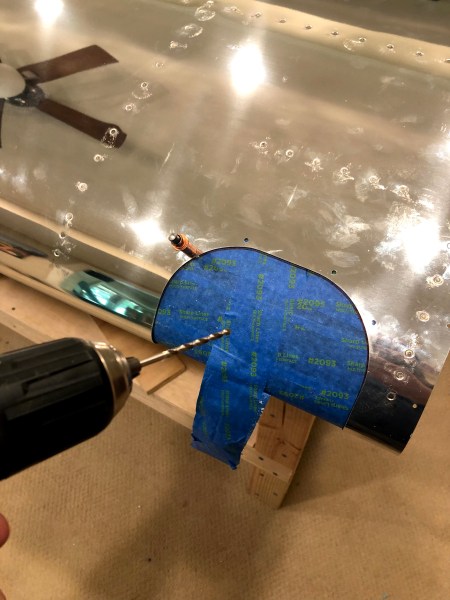
Set the lens into place and used the tape “leash” i made on the front of the lens to pull it tight against the inside of the skin. Drilled and clecoed all th holes with a #30 plexi bit.
img_2620

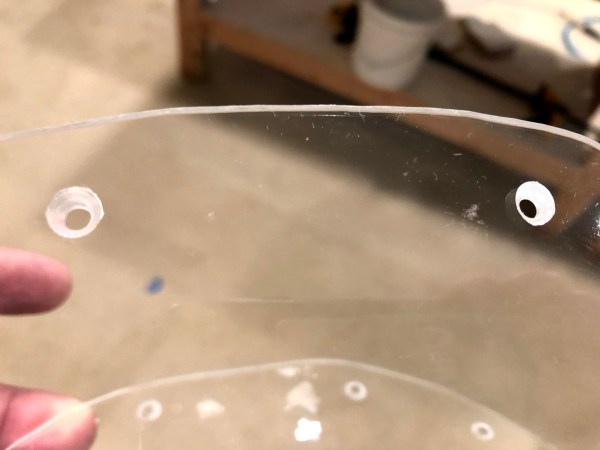
Remove the lens from the wing and removed the tape. I countersunk the holes with 100 degree zero-flute countersink bit in the electric drill. I deburred the back side of the holes with a single turn of the same bit.
img_2621

I used VHB double stick tape to secure the backing plates to the lens.

img_2622

I installed the landing light onto the bracket that I had riveted into the wing in an earlier step.
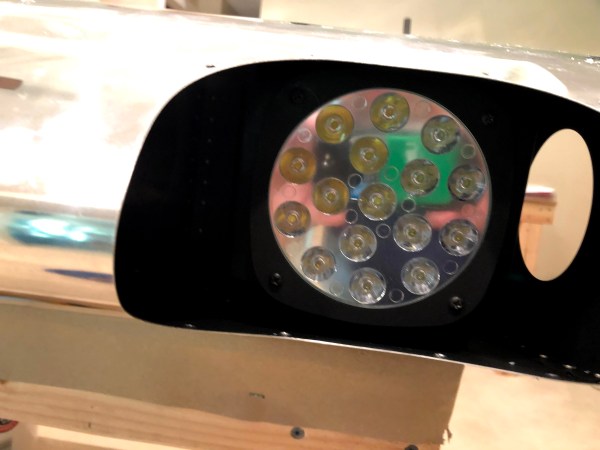
img_2624

I secured the lens in place with #6 stainless screws.
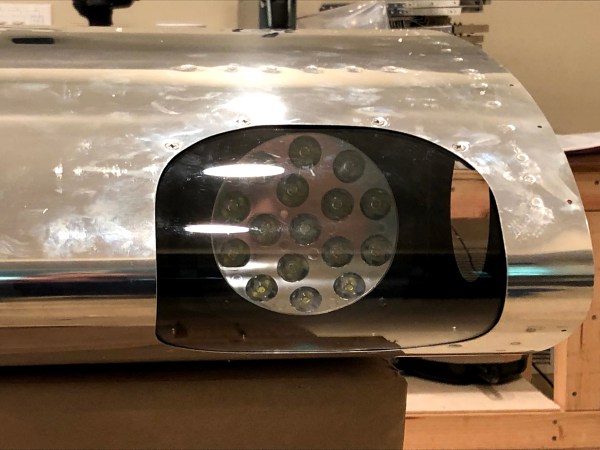
img_2627

And then repeated the whole process for the right wing.

img_2628

This completes section 17–Outboard leading edges!

Today’s Time (hours): 4.0
Wing Time (hours): 137.0
Total Time (hours): 348.0